Corporate Training Programs
Build Competence. Reduce Risk. Strengthen Safety Culture.
Practical, instructor-led HSE training built around your organisation's actual roles, risks and current competency levels — not a fixed slide deck.
Understand → Assess → Design → Deliver → Evaluate → Improve
Every corporate programme is built the same disciplined way as our other work — starting from your organisation's risk profile and job roles, not a generic curriculum. In practice this means a short scoping conversation before any date is fixed: what does your site actually look like, who's attending, what's the shift pattern, and what has gone wrong before. That conversation is what turns a generic "Work at Height" deck into a session built around your actual scaffolding, your actual anchor points, your actual rescue plan.
Understand
Organisational risk, structure and existing competency levels.
Assess
Training needs analysis against actual job roles and hazards.
Design
Bespoke programme content, matched to your operation and workforce.
Deliver
Classroom, site-based practical or blended delivery, as suited.
Evaluate
Competency assessment against defined standards, not attendance alone.
Improve
Programme refinement based on evaluation and changing risk.
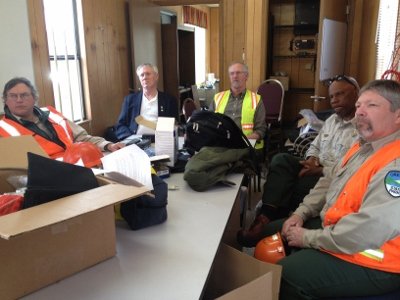
The same programme looks different on a construction site than in a warehouse
A Work at Height session for a construction crew working from scaffolding is a different conversation from one for a warehouse team accessing high racking with a cherry picker — different anchor points, different rescue considerations, different regulatory framing. Rather than run one generic version of each named programme, we adapt the examples, equipment references and practical exercises to the sector we're training for. A Fire Safety & Emergency Response session for a chemical storage facility spends more time on specific fire classes and incompatible-material risk than the same session for a corporate office tower, where evacuation logistics for a high-occupancy building take priority instead.
Five core programmes, each built to a defined syllabus
Every programme combines instructor-led teaching with hands-on, practical components. Below is what's typically covered, how long it usually takes, how it's delivered, and what you can expect at the end — treat the durations as a starting point for scoping, not a fixed quote; the exact structure is confirmed once we understand your site and group size.
Work at Height Safety
Working at height remains one of the leading causes of serious injury on Indian industrial and construction sites. This programme builds the practical judgement and equipment competence needed to work safely at height, not just awareness of the rules.
What's covered
- Hazard identification
- Fall prevention and protection
- Harness inspection & use
- Anchor points
- Rescue planning
- Practical demonstrations
| Typical duration | 1 day (awareness). Extends to 2 days where authorised-person or rescue-specific competency is required. |
|---|---|
| Delivery mode | On-site classroom plus mandatory practical session — harness fitting, anchor point selection and fall-arrest equipment inspection cannot be taught adequately online. |
| Who attends | Anyone who works at height, supervises height work, or issues permits for it. No formal prerequisite; basic fitness for practical exercises is expected. |
| Assessment | Practical demonstration of harness inspection and correct use, plus a short written or verbal knowledge check. |
| On completion | Avertiz certificate of training completion, valid as an internal competency record. Refresher recommended every 1–2 years or after an equipment or process change. |
Work at height is addressed under the Building and Other Construction Workers (BOCW) Act, 1996 and its state rules for construction sites, and under general provisions of the Occupational Safety, Health and Working Conditions Code, 2020 for other workplaces. Exact competency and PPE requirements vary by state rule — confirm current applicability for your site type.
Enquire About This Programme →Behaviour Based Safety (BBS)
BBS shifts safety management from reacting to incidents towards observing and reinforcing safe behaviour before something goes wrong. This programme is built around observation and intervention skills your supervisors and safety champions can use immediately on the floor.
What's covered
- Safety culture development
- Safe vs unsafe behaviours
- Observation techniques
- Positive intervention
- Feedback methods
- Leadership involvement
| Typical duration | 1 day for the core programme. Often structured as an ongoing observation and coaching cycle rather than a one-time session — discussed during scoping. |
|---|---|
| Delivery mode | On-site or virtual classroom for the core concepts, followed by on-the-floor observation practice, which works best delivered in person. |
| Who attends | Supervisors, shift leads and nominated safety champions get the most direct use from it; awareness-level sessions can be run for the wider workforce. |
| Assessment | Participants complete a live observation exercise and structured feedback conversation during the session, assessed against a simple observation checklist. |
| On completion | Avertiz certificate of training completion. BBS is most effective as a sustained programme, not a single certificate — we can propose a periodic observation cadence as part of Managed HSE Services. |
Fire Safety & Emergency Response
This programme covers both the fire prevention knowledge every employee needs and the practical response skills required of fire wardens and emergency teams, backed by hands-on extinguisher practice rather than slides alone.
What's covered
- Fire triangle & fire classes
- Fire prevention
- Portable fire extinguisher training
- Emergency evacuation
- Fire warden responsibilities
- Mock drills
| Typical duration | 1 day, combining classroom theory with a live extinguisher-handling session and an evacuation walk-through or drill. |
|---|---|
| Delivery mode | On-site only for the practical component — extinguisher discharge practice and evacuation drills need the actual site and equipment. Theory portion can be delivered virtually if needed. |
| Who attends | Open to the general workforce for awareness; fire warden and emergency-team roles should attend the full practical session. |
| Assessment | Supervised extinguisher use on a live or simulated fire source, plus a short knowledge check on fire classes and evacuation procedure. |
| On completion | Avertiz certificate of training completion. Fire warden competency is typically refreshed annually, alongside your facility's mock drill programme. |
Fire safety provisions for buildings are set out in National Building Code (NBC) 2016, Part 4 – Fire and Life Safety, published by the Bureau of Indian Standards and adopted through state and municipal fire rules and Fire NOC conditions. State fire rules can be more stringent than the national baseline — always confirm against your local Fire NOC.
Enquire About This Programme →First Aid Awareness
A practical awareness programme covering the immediate actions that make a genuine difference in the first minutes of a medical emergency at work, until professional medical help arrives.
What's covered
- CPR awareness
- Bleeding control
- Fractures
- Burns
- Shock management
- Medical emergency response
| Typical duration | 1 day, hands-on. Groups are kept small (typically up to 25–30 participants) so everyone gets supervised practice, not just demonstration. |
|---|---|
| Delivery mode | On-site, practical. Hands-on practice — bandaging, recovery position, CPR technique — is the core of the session and is not delivered as a virtual-only course. |
| Who attends | Open to any employee; factories and larger establishments should prioritise the person(s) formally designated to be in charge of first-aid provision. |
| Assessment | Supervised practical demonstration of core techniques (bandaging, recovery position, CPR technique on a training manikin) plus a short knowledge check. |
| On completion | Avertiz certificate of training completion, confirming attendance and practical competency assessed on the day. |
This is an awareness-level programme, not a statutory-certified first aid course. Where your establishment needs a first-aid certificate formally recognised by a State Government under the Factories Act, 1948 (or the equivalent provision once fully notified under the Occupational Safety, Health and Working Conditions Code, 2020), we coordinate delivery through an approved certifying body alongside this training.
Section 45 of the Factories Act, 1948 requires factories to maintain first-aid boxes in a fixed ratio to workforce size (historically one box per 150 workers, with state amendments varying this), each in the charge of a person holding a certificate recognised by the State Government. The Occupational Safety, Health and Working Conditions Code, 2020 has now come into force and consolidates the Factories Act among other labour laws; central and state rules under the new Code are still being finalised in stages. Confirm the current first-aid staffing ratio and certifying-authority requirement applicable to your establishment and state before finalising your compliance position.
Enquire About This Programme →Electrical Safety
Electrical incidents are frequently severe, and frequently preventable. This programme is aimed at anyone who works on, near, or supervises electrical systems and equipment, with a strong practical isolation-and-permit focus.
What's covered
- Electrical hazards
- Shock prevention
- Lock Out Tag Out (LOTO)
- Arc Flash Awareness
- Safe isolation
- PPE requirements
| Typical duration | 1 day for general workforce awareness and LOTO discipline; 2 days where arc flash and safe-isolation practical competency for electrical/maintenance personnel is required. |
|---|---|
| Delivery mode | On-site, with a mandatory practical component on isolation procedure, lockout device application and PPE use specific to your electrical systems. |
| Who attends | General workforce awareness track for anyone working near electrical equipment; the extended track is for electricians, maintenance staff and anyone issuing electrical permits. |
| Assessment | Practical demonstration of a correct isolation and lockout sequence, plus a knowledge check on hazard recognition and PPE selection. |
| On completion | Avertiz certificate of training completion. Designated electrical personnel should be retrained periodically in line with your internal competency framework. |
Electrical safety in India is governed by the Central Electricity Authority (Measures relating to Safety and Electric Supply) Regulations — originally issued in 2010 and since updated — made under the Electricity Act, 2003, which set requirements for designated safety personnel and mandatory training for those operating and maintaining electrical systems. Confirm the current regulation version and any state electrical inspectorate requirements applicable to your facility.
Enquire About This Programme →Beyond named courses: leadership, behaviour and role-based development
Not every capability gap fits neatly into a named course. These programmes are scoped individually rather than run to a fixed syllabus:
Leadership programmes
Safety leadership development for senior management and plant leadership, focused on decision-making and accountability, not awareness alone. Typically run as a half-day to full-day workshop, scaled to the size of the leadership group.
Supervisor capability
Practical programmes for frontline supervisors, who carry the most direct influence over daily safety behaviour. Usually 1 day, combining case discussion with real scenarios from your site.
Frontline workforce development
Role-specific competency building for operators and workers, grounded in the actual tasks and hazards they face. Duration depends on role complexity — often delivered in short, repeated sessions rather than one long day.
Contractor workforce development
Induction and competency programmes for contracted workforces, aligned to your site's specific risk. Often delivered as a standing induction module repeated for each new contractor batch.
Induction systems
Structured induction programmes for new employees and contractors, built around actual site hazards rather than a generic HR orientation slide.
Training needs analysis & competency frameworks
Role-based competency assessment and frameworks, where a client needs one built from scratch — typically a 1–3 week engagement depending on the number of roles covered.
Training backed by the same technical standard as our advisory work
Industry-experienced trainers
Delivered by people with real field exposure to the hazards being taught, not classroom-only instructors reading from a manual.
Practical, interactive learning
Sessions are built around discussion, demonstration and hands-on practice — most named programmes have a mandatory practical component.
Customised training modules
Content is adapted to your site, equipment and workforce before delivery, based on the scoping conversation.
On-site and virtual delivery
Choose the format that fits your operation — though practical components generally need to happen on-site.
Hands-on demonstrations
Equipment, PPE and procedure demonstrations feature wherever the topic calls for it, using your actual equipment where possible.
Standards-aligned content
Developed with reference to recognised national and international HSE practice, including applicable Indian regulation where relevant.
Assessment & competency evaluation
Participants are evaluated against defined learning objectives, not attendance alone — see the assessment method for each programme above.
Certificates of completion
Every participant receives an Avertiz certificate of training completion, confirming what was covered and assessed.
Delivered the way your operation actually needs it
On-site Corporate Training
Delivered at your facility, using your own equipment and layout wherever the topic allows.
Virtual Instructor-led Training
Live, trainer-led sessions for theory-heavy content, useful for multi-site or geographically spread teams.
Classroom Training
Structured, in-person sessions at your site or a suitable external venue.
Practical Demonstrations
Hands-on equipment and procedure practice, built into every named programme where relevant.
Refresher Training
Shorter sessions to renew competency on a periodic cycle, rather than repeating the full programme.
Safety Campaigns
Themed, time-bound awareness pushes across a site or organisation.
Safety Week Programs
A structured multi-day programme combining several sessions, drills and activities.
Common questions
What's the minimum group size for on-site training?
There's no strict minimum, but on-site delivery is most cost-effective from around 8–10 participants. Smaller groups are usually better served by combining programmes into a single day, or joining a scheduled multi-client batch where available.
Can you combine two or more named programmes into one visit?
Yes — this is common for sites bringing us in from another city. A combined Work at Height plus Electrical Safety visit, for instance, is typically scoped as a 2-day on-site engagement rather than two separate trips.
Do you provide the practical equipment, or do we?
Where possible we use your own site equipment (your harnesses, your extinguishers) since that's what participants will actually use afterwards. Where a site doesn't have suitable equipment, we can bring standard training equipment — confirmed at scoping.
How many people can attend one practical session?
Practical components (harness fitting, extinguisher use, CPR practice) are kept to small supervised groups — typically 12–15 per trainer — so everyone gets hands-on practice, not just a demonstration. Larger workforces are split into batches.
Schedule a training programme for your team
Tell us your site, workforce size and which programme (or combination) you need, and we'll propose dates and a delivery format.